
Quick Answers: DoorDash Taxes
If you just want the short version:
- DoorDash does not take taxes out of your pay
- DoorDash drivers are considered self-employed
- All DoorDash income is taxable, including tips and bonuses
- You may receive a 1099 form, but you must report income even if you do not
- Most drivers owe income tax plus self-employment tax
- Some drivers must make quarterly estimated tax payments
How Do Taxes Work with DoorDash?
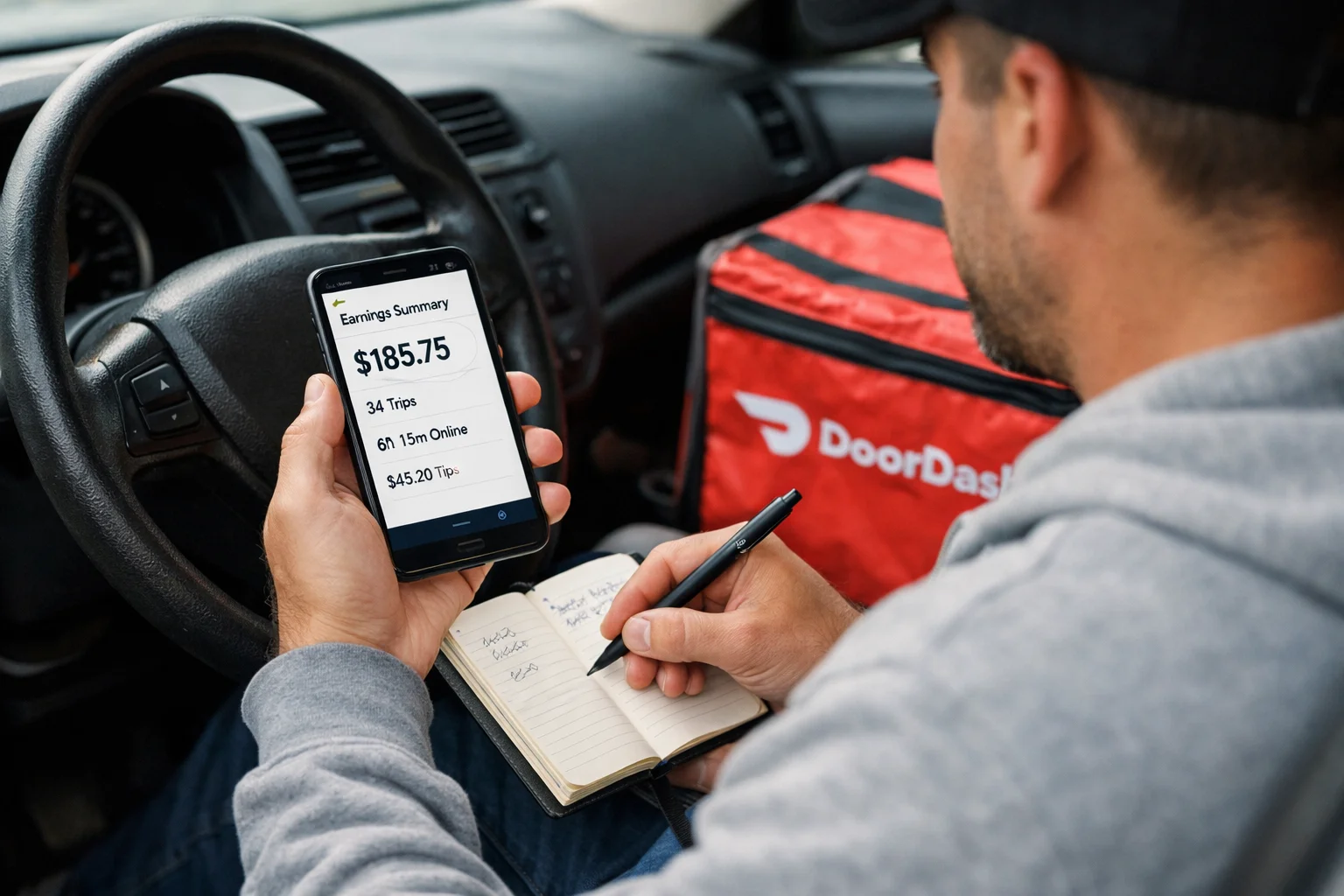
DoorDash drivers are treated as self-employed for tax purposes. That means you are running your own small business, even if you only dash part-time.
Unlike a traditional job, DoorDash does not withhold federal income tax, Social Security, or Medicare from your pay. You receive your earnings in full, and you are responsible for handling your own taxes.
When tax season comes, you report your DoorDash income as business income. You also report your business expenses. What remains after expenses is your net profit, and that is what gets taxed.
Because no taxes are automatically withheld, many drivers are surprised at how much they owe at the end of the year. Planning ahead makes a big difference.
Is DoorDash Income Taxable?
Yes. DoorDash income is taxable.
This includes:
- Base pay from deliveries
- Customer tips
- Peak pay bonuses
- Referral bonuses
- Promotions and incentives
It does not matter whether you drove full-time or just a few weekends. Even part-time or side income must be reported on your tax return.
Some drivers assume that if they earn under a certain amount, they do not need to report it. That is not accurate. All income is taxable, even if you do not receive a tax form from DoorDash.
The IRS considers gig income the same as any other self-employment income. The key difference is that you are responsible for tracking and reporting it yourself.
Does DoorDash Take Taxes Out of Your Pay?

No. DoorDash does not take taxes out of your pay.
This is one of the most important things drivers need to understand.
At a regular W-2 job, your employer withholds taxes from every paycheck. With DoorDash, you receive your full earnings. No federal income tax. No Social Security. No Medicare. No state tax withholding.
That does not mean you do not owe taxes. It just means the responsibility shifts to you.
A simple rule many drivers follow is setting aside a percentage of each payout into a separate savings account. The exact percentage depends on your overall income and expenses, but the goal is to avoid being caught off guard when taxes are due.
If you treat DoorDash like a business from the beginning, taxes become much more manageable.
DoorDash Driver Classification: Independent Contractor Explained
When you drive for DoorDash, you are not considered an employee. You are classified as an independent contractor. That means you are self-employed in the eyes of the IRS.
As an independent contractor, you are responsible for reporting your own income, tracking your own expenses, and paying your own taxes. DoorDash does not withhold Social Security, Medicare, or federal income taxes from your pay. You handle that yourself.
Because of this classification, DoorDash drivers typically file a Schedule C to report business income and expenses, just like other self-employed individuals.
Understanding this classification is important. Once you realize you are running a small business, even if it is part-time, your tax responsibilities make much more sense.
DoorDash Tax Documents You Need to Know About
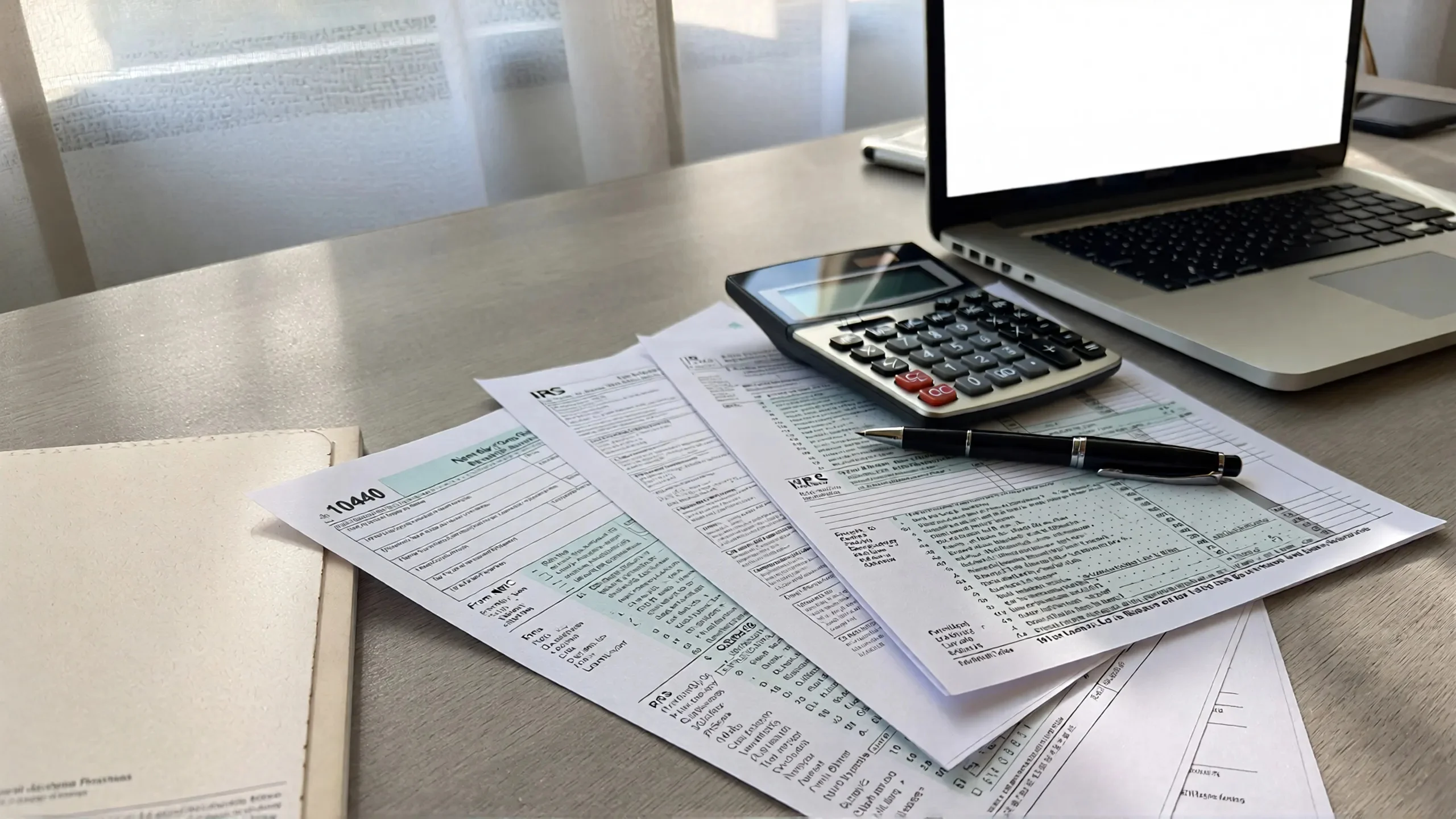
Understanding your tax documents makes filing much easier. DoorDash provides certain forms, but it is still your responsibility to report all income accurately.
Form 1099-NEC
DoorDash typically issues a Form 1099-NEC if you earn $600 or more during the year. This threshold comes from IRS reporting rules for nonemployee compensation. However, even if you earn less than $600 and do not receive a form, you are still required to report all income on your tax return.
DoorDash typically makes this form available by January 31 of the following year. You may receive it electronically through their platform.
The 1099-NEC shows your total earnings before expenses. It does not subtract mileage, gas, or other business costs. When you file your taxes, you report this income and then subtract your deductible expenses to determine your net profit.
That net profit is what gets taxed.
What If You Don’t Receive a 1099?
Even if you do not receive a 1099, you are still required to report your income.
There are a few reasons you might not receive one:
- You earned less than $600
- Your contact information was outdated
- You worked only briefly
None of those removes your reporting obligation.
You can use your earnings history inside the DoorDash app or your bank deposit records to calculate your total income. The IRS requires you to report all business income, whether or not a tax form was issued.
Accurate reporting protects you from penalties and prevents problems later.
What Taxes Do DoorDash Drivers Have to Pay?
Because you are self-employed, your tax responsibilities look different from those of someone with a W-2 job. There are typically three types of taxes DoorDash drivers need to consider.
Federal Income Tax
DoorDash drivers pay federal income tax on their net earnings, not their total payouts.
Net earnings = Total income minus deductible business expenses.
Your income tax rate depends on your total taxable income for the year. That includes DoorDash income plus any other income you may have, such as a W-2 job or other gig work.
The more you deduct legitimately, the lower your taxable income.
Self-Employment Tax
This is the part that surprises many drivers.
Self-employment tax covers Social Security and Medicare contributions. When you work a regular job, your employer pays half of these taxes, and you pay the other half. When you are self-employed, you pay both portions.
The self-employment tax rate is currently 15.3% of your net earnings.
That is separate from federal income tax.
The good news is that part of your self-employment tax is deductible, which helps reduce your overall taxable income.
State and Local Taxes
Depending on where you live, you may also owe state income tax.
Some states have no state income tax. Others do. Even if your state does not have income tax, you still owe federal income tax and self-employment tax.
Local taxes may apply in certain areas as well. This varies by state and municipality.
Understanding your local requirements helps you avoid surprises at filing time.
Do DoorDash Drivers Need to Make Quarterly Estimated Tax Payments?
In many cases, yes.
Because DoorDash does not withhold taxes from your pay, the IRS expects you to pay taxes throughout the year instead of waiting until April.
Quarterly estimated taxes are advance payments toward your expected annual tax bill. They are typically due:
- April
- June
- September
- January
You generally need to make quarterly payments if you expect to owe $1,000 or more in taxes for the year after credits and withholding.
If you do not make required estimated payments, you may face penalties and interest, even if you pay the full amount later.
Many drivers avoid penalties by setting aside money regularly and calculating estimated payments based on their projected income.
If your income fluctuates or you are unsure how much to pay, speaking with a tax professional can help you avoid underpaying or overpaying.
What Happens If You Don’t Report DoorDash Income?
Not reporting DoorDash income can create serious problems.
DoorDash reports earnings to the IRS when it issues a 1099-NEC. The IRS uses automated systems to match those forms against tax returns. If income is reported to them but missing from your return, it often triggers a notice.
If you fail to report income, you could face:
- Additional tax owed
- Interest on unpaid tax
- Late payment penalties
- Accuracy-related penalties
In more serious cases, repeated or intentional failure to report income can increase audit risk.
Sometimes drivers do not report income because they assume small amounts do not matter. Other times, they did not receive a 1099 and think that means nothing needs to be filed. Neither assumption is correct.
The IRS requires you to report all self-employment income, whether or not you receive a form.
The good news is this: honest reporting and proper recordkeeping dramatically reduce your risk. When income and expenses are tracked clearly, filing becomes straightforward and far less stressful.
If you ever realize you missed income in a prior year, it is often possible to amend your return. Taking action early is almost always better than ignoring the issue.
How TaxMan Multiservices Helps DoorDash Drivers
DoorDash drivers are not employees. You are running a small business. That means your taxes should be handled like a business, not rushed through like a simple W-2 return.
At TaxMan Multiservices, we specialize in working with gig workers, independent contractors, and self-employed professionals. We understand how DoorDash taxes work in real life, not just in theory.
We help dashers:
- Accurately report all income
- Identify legitimate business deductions
- Calculate self-employment tax correctly
- Determine whether quarterly payments are required
- Avoid penalties and surprise tax bills
Many drivers leave money on the table because they are unsure what qualifies as a deduction. Others overpay because they do not understand how self-employment tax works.
Our goal is clarity. We review how you earn, how you spend, and how your income fits into your overall tax picture. That allows you to file confidently and legally reduce what you owe when deductions apply.
If you want support beyond basic filing, we also provide tax planning and bookkeeping guidance so you are not scrambling every April.
When it comes to DoorDash taxes, proactive planning makes a difference.
When Should a DoorDash Driver Talk to a Tax Professional?
Some drivers can handle basic filing on their own. But certain situations make professional guidance especially valuable.
You should strongly consider speaking with a tax professional if:
- You earned significantly more this year than last year
- You work multiple gig platforms
- You also have a W-2 job
- You are unsure how to calculate quarterly estimated payments
- You received an IRS notice
- You are not sure which expenses qualify as deductions
The earlier you get guidance, the better. Waiting until the filing deadline limits your options.
Tax planning is different from tax preparation. Planning helps you make smarter decisions during the year, so your tax outcome is better when you file.
For many DoorDash drivers, even a short consultation provides clarity that saves time, stress, and money.
Conclusion
DoorDash income is real income, and with that comes real tax responsibility. The good news is that once you understand how it works, it becomes much more manageable.
As a DoorDash driver, you are self-employed. That means you are responsible for reporting your income, tracking your expenses, and paying both income tax and self-employment tax. DoorDash does not withhold taxes for you, so planning ahead is key.
The earlier you understand your numbers, the fewer surprises you will face at tax time.
If you want clarity about your specific situation, the best place to start is with a free DoorDash tax return estimate. You will get a transparent look at what your filing may involve and what to expect before making any commitments.
Even if you are just exploring your options, having a clear estimate helps you make informed decisions and move forward with confidence.
Frequently Asked Questions About DoorDash Taxes
Do I need to file taxes for DoorDash if I only worked for a few months?
Yes. If you earned income from DoorDash, you may need to file a tax return even if you only worked a few months.
DoorDash drivers are considered self-employed. If your net earnings from self-employment are $400 or more for the year, the IRS generally requires you to file a return and pay self-employment tax. This rule applies even if you did not receive a 1099 form.
Even if you earned less than $400, you may still need to file if your total income from all sources meets the IRS filing threshold. The safest approach is to review your total income and expenses before assuming you do not need to file.
Can DoorDash drivers file taxes jointly with a spouse who has a W-2 job?
Yes. DoorDash drivers can file a joint tax return with a spouse who has a W-2 job.
When filing jointly, both spouses combine their income on one return. This includes W-2 wages and DoorDash self-employment income. Filing jointly often results in lower tax rates and higher standard deductions compared to filing separately, but the right choice depends on your full financial picture.
Even when filing jointly, the DoorDash income must still be reported on Schedule C, and self-employment tax still applies to the net profit.
How long should DoorDash drivers keep tax records and receipts?
DoorDash drivers should generally keep tax records and receipts for at least three years after filing a return.
This includes:
- Mileage logs
- Gas and vehicle expense records
- Phone bills used for business
- 1099 forms
- Bank statements
If you underreport income by a significant amount, the IRS may have up to six years to review your return. Keeping organized records protects you if questions ever arise and makes future tax filing easier.
Does DoorDash report my earnings directly to the IRS?
Yes. If you earn $600 or more in a year, DoorDash typically issues a Form 1099-NEC and sends a copy to the IRS.
However, even if you earn less than $600 and do not receive a 1099, you are still legally required to report all DoorDash income. The IRS expects you to report the full amount you earned, not just what appears on a tax form.
Because gig platforms share information with the IRS, failing to report income can trigger notices or penalties.
Can I amend my tax return if I forgot to include DoorDash income?
Yes. If you forgot to report DoorDash income, you can correct it by filing an amended tax return using Form 1040-X.
Amending your return allows you to:
- Add missing income
- Correct deductions
- Update tax calculations
It is better to correct an error voluntarily than to wait for an IRS notice. Filing an amended return can reduce penalties and show good-faith compliance.