
.png)
Self-Employed House Cleaner Taxes 101
- TaxMan Multiservices

- Mar 27
- 11 min read
If you clean houses for a living, chances are you didn’t start your business because you love dealing with taxes.
Most independent cleaners just want to focus on their clients, keep their schedule full, and get paid fairly for their work. Then tax season comes around and suddenly there are questions about forms, deductions, quarterly payments, and what the IRS expects from someone running a small cleaning business.
That confusion is extremely common.
Many house cleaners operate independently without realizing that the IRS usually considers them self-employed business owners. That changes how taxes work. Instead of having taxes automatically withheld like a traditional job, you are responsible for tracking income, reporting expenses, and paying the correct taxes yourself.If that already sounds overwhelming, you’re not alone. Many independent cleaners have the same questions when they first start working for themselves. Getting clear guidance on self-employed taxes can make the process much easier and help you avoid mistakes that could cost money later.
The good news is that once you understand the basics, managing taxes becomes far more straightforward.
In this guide, we’ll explain how self-employed house cleaner taxes work, what forms you may need to file, and how to stay organized so tax season doesn’t become stressful.
Quick Answers: House Cleaner Taxes
If you just want the short version, here are the key things to know.
Independent house cleaners are usually considered self-employed
You may owe income tax and self-employment tax
Taxes are not automatically withheld from your payments
You must report all income, including cash payments
Even if you do not receive a 1099 form, you still must report earnings
Many self-employed workers need to make quarterly estimated tax payments
Now, let’s break down what all of this actually means for someone running a house cleaning business.
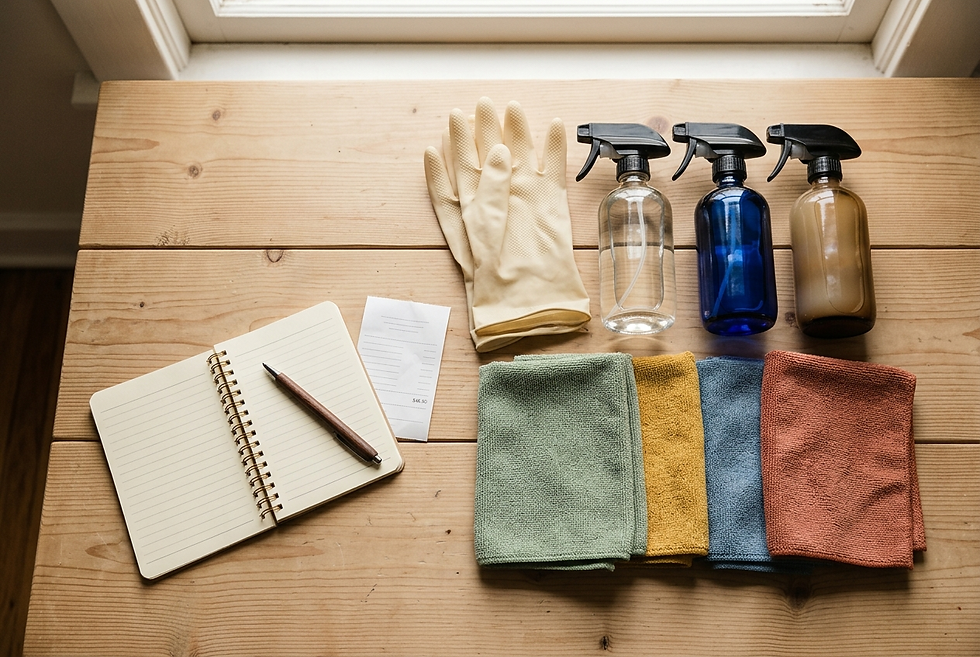
Understanding Self-Employed House Cleaner Taxes
When you work as an independent cleaner, the IRS generally treats your work as self-employment.That means you are running your own business, even if it is just you providing cleaning services to clients. Many independent workers are surprised to learn this. Even if you think of yourself as “just cleaning houses,” the IRS views your work as operating a small business.If you want a deeper look at how taxes work for freelancers and independent workers overall, our solopreneur taxes guide explains the basics in more detail.
Because you are considered self-employed, taxes work differently than they do at a regular job.
Instead of receiving a paycheck with taxes already withheld, you are typically paid the full amount for your work. No income tax is taken out automatically. Social Security and Medicare contributions are not withheld either.
That responsibility falls on you.
Self-employed house cleaners usually need to pay two main types of tax:
Income tax – based on the profit you earn from your business.
Self-employment tax – which covers Social Security and Medicare contributions for self-employed workers.
Your total tax bill is based on your profit, not your total earnings. Profit is what remains after subtracting business expenses such as supplies, mileage, or equipment from your total income.This is why keeping organized records throughout the year can make a big difference when it comes time to file your taxes.
Are You Considered Self-Employed as a House Cleaner?
Many house cleaners are not sure whether they are technically self-employed or working as an employee. The distinction matters because it determines how your taxes are handled.
In simple terms, if you operate independently and provide cleaning services to clients on your own terms, you are usually considered self-employed.
However, if you work for a cleaning company that sets your hours, provides supplies, and pays you through payroll, you may be classified as an employee instead.
Understanding this difference is the first step to understanding how your taxes work.
Employee vs. Independent Contractor
An employee is typically paid through payroll and receives a W-2 form at the end of the year. The employer handles tax withholding, including federal income tax, Social Security, and Medicare.An independent contractor, on the other hand, is responsible for managing their own taxes.Most independent house cleaners fall into this second category. They find their own clients, set their own rates, and receive payments directly from homeowners or businesses. Instead of a W-2, they may receive a 1099-NEC form if a client pays them above a certain amount during the year.
But even if no form is issued, the income still needs to be reported.
What the IRS Looks At
The IRS looks at several factors when determining whether someone is an employee or an independent contractor.
For house cleaners, some common indicators include:
Control over your schedule: Do you choose when and where you work, or does someone else assign your hours?
Control over tools and supplies: Do you bring your own cleaning equipment and products, or are they provided by an employer?
Control over pricing and clients: Do you decide how much to charge and which clients to accept?
If you manage these parts of your work yourself, you are most likely operating as a self-employed cleaner.
Once that classification is clear, the next step is understanding the specific tax rules that apply to your business.
Important House Cleaner Tax Rules You Must Know
When you work for yourself, the IRS expects you to keep track of your income and report it accurately. Many independent cleaners learn these rules the hard way after their first tax season.
Here are a few important tax rules every self-employed house cleaner should understand.
All income must be reported
This includes payments made through apps like Zelle, Cash App, or Venmo, as well as checks and cash payments from clients. Even if a client pays you directly and no tax form is issued, that income is still considered taxable.
For example, imagine a cleaner with eight regular clients. Four pay through an app, two pay by check, and two usually pay in cash. At the end of the year, the cleaner might only receive one tax form from a client, but the IRS still expects the total income from all eight clients to be reported.
You may not receive tax forms from every client
Many homeowners who hire independent cleaners do not issue tax forms. That does not change your responsibility to report your earnings. This is why keeping simple records of payments throughout the year is so important.
You should keep records for several years
The IRS generally recommends keeping tax records for at least three years, though many professionals suggest holding onto them for up to seven years in case questions arise.These records may include invoices, mileage logs, bank statements, receipts for supplies, and copies of your tax returns.Staying organized throughout the year can save hours of stress when tax season arrives.

How to Report Income from House Cleaning Jobs
Reporting income as a self-employed cleaner is usually simpler than people expect. Most independent workers report their business income using two main forms when they file their taxes.
These forms allow you to report what you earned, subtract business expenses, and calculate the profit from your cleaning work.
Form 1099-NEC
Some clients may send you a Form 1099-NEC at the end of the year. This form reports payments made to independent contractors.Businesses that pay an independent worker $600 or more during the year are generally required to issue this form.However, many house cleaners primarily work for individual homeowners rather than businesses. In those situations, clients often do not issue a 1099.That does not mean the income disappears for tax purposes.If you earned money from cleaning homes, it still needs to be reported even if no form was sent to you. Many cleaners rely on bank deposits, payment app records, or simple spreadsheets to track their yearly earnings.
Schedule C (Profit or Loss From Business)
Most self-employed house cleaners report their business activity using Schedule C, a form filed with your personal tax return.
Schedule C is where you list:
Your total income from cleaning work
Your business expenses
Your final profit or loss
The key number here is profit, which is your income minus your expenses. That profit is what your taxes are based on.For example, if a cleaner earns $40,000 during the year but spends $8,000 on supplies, mileage, and equipment, their taxable business profit would be $32,000.This is why understanding deductions can make a significant difference for self-employed cleaners.
Self-Employment Tax Explained in Simple Terms
Many independent cleaners are surprised when they first hear about self-employment tax. So what is it? Self-employment tax is how self-employed workers pay into Social Security and Medicare. When you work a regular job, these taxes are automatically withheld from your paycheck. Your employer also pays part of them.When you work for yourself, you are responsible for both portions.The current self-employment tax rate is 15.3% of your net earnings, according to the IRS. Net earnings simply means your business profit after expenses are deducted.The good news is that half of this tax is deductible when you file your return. That deduction helps reduce your overall taxable income.For many house cleaners, this is the biggest tax difference between working as an employee and running their own cleaning business.
Self-Employed House Cleaner Tax Deductions
One advantage of being self-employed is that you can deduct many of the costs required to run your cleaning business.
These deductions reduce your taxable income, which can lower the amount of tax you owe.
To qualify, expenses generally must be ordinary and necessary for your business, according to IRS guidelines.Many independent cleaners miss deductions simply because they do not realize certain expenses qualify.Here are some of the most common deductions available for house cleaners.
Cleaning Supplies and Equipment
Most house cleaners spend a significant amount on supplies and equipment throughout the year.
These costs are typically deductible business expenses.
Examples may include:
Cleaning chemicals and disinfectants
Paper towels and wipes
Gloves and protective equipment
Mops, buckets, and brooms
Vacuum cleaners and replacement parts
Scrub brushes and specialty cleaning tools
If you regularly replace equipment or buy supplies for your jobs, those costs can often be deducted as part of your business expenses.
Keeping receipts or simple purchase records helps ensure these expenses are not overlooked during tax time.
Transportation and Mileage
Transportation is one of the largest deductions for many house cleaners.If you drive between client homes during the day, those miles may qualify as a business deduction.The IRS allows self-employed workers to deduct mileage driven for business purposes. This typically includes driving from one cleaning job to another or traveling to pick up supplies.However, commuting from home to your first client of the day usually does not qualify.Because mileage deductions can add up quickly, many cleaners use a simple mileage tracking app or keep a small notebook in their vehicle to record work-related trips.
Home Office Deduction
Some independent cleaners qualify for the home office deduction.This deduction may apply if you use a specific space in your home regularly and exclusively for managing your business.For example, a house cleaner might use a desk at home to:
schedule appointments
communicate with clients
manage invoices and payments
track expenses and mileage
If the space is used strictly for business tasks, a portion of home expenses such as utilities or internet may be deductible.
Because home office rules can be confusing, many business owners choose to review this deduction with a tax professional before claiming it.
Phone and Internet
Many house cleaners rely on their phones to manage their work.
Common business uses include:
scheduling clients
responding to messages
sending invoices
managing payment apps
using navigation to reach client homes
If you use your phone or internet for business purposes, a portion of those costs may be deductible.The key is that only the business portion of the expense qualifies.
Insurance and Licenses
If you operate your cleaning work as a small business, you may also have costs related to insurance or local business registration.
These expenses may include:
liability insurance for your cleaning business
local business licenses or permits
state or city registration fees
These types of costs are typically considered necessary for running your business and may be deductible.
Filing Taxes for House Cleaning (Step-by-Step)
Many self-employed cleaners assume filing taxes will be extremely complicated. In reality, once your income and expenses are organized, the process becomes much more manageable.
Here is a simple overview of how filing taxes for house cleaning typically works.
Gather your income records
Start by collecting records of all payments you received during the year. This may include: 1099 forms, bank deposits, payment app statements, and invoices or payment logs.
Remember: even if a client did not issue a tax form, the income still needs to be reported.
Total your business expenses
Next, calculate your deductible business expenses. These might include cleaning supplies, mileage between jobs, equipment, insurance, or other costs required to operate your business.
Accurate expense tracking is important because it reduces the amount of income that is taxed.
Report income and expenses on Schedule C
Self-employed house cleaners typically report their business income using Schedule C (Profit or Loss From Business). This form summarizes: total business income, deductible business expenses, and final profit from the business. Your profit, which is income minus expenses, is the amount used to calculate your taxes.
Calculate self-employment tax
Once profit is determined, self-employment tax is calculated using Schedule SE.
This tax covers your Social Security and Medicare contributions as a self-employed worker.
File your tax return
Self-employed individuals generally file their tax return by April 15, though the exact deadline can vary slightly depending on the year.Because every situation is different, many small business owners choose to work with a tax professional to ensure everything is reported correctly.
Do House Cleaners Need to Pay Quarterly Taxes?
Many self-employed house cleaners are required to make quarterly estimated tax payments.Because taxes are not automatically withheld from your income, the IRS expects self-employed workers to pay taxes throughout the year instead of waiting until tax season.These payments are typically due four times per year:
April
June
September
January of the following year
Quarterly payments are estimated contributions toward your total annual tax bill.
If you wait until the end of the year to pay everything at once, the IRS may charge penalties or interest for underpayment.For many independent cleaners, setting aside a portion of each payment they receive can make quarterly taxes easier to manage.
Should You Form an LLC as a House Cleaner?
Many independent cleaners eventually ask whether they should form an LLC (Limited Liability Company) for their business.The answer depends on your situation and goals.From a tax perspective, most single-owner LLCs are still taxed the same way as sole proprietors. Income and expenses are typically reported on Schedule C, just like any other self-employed business.However, forming an LLC may offer other benefits.For example, it can help separate your personal finances from your business operations and may provide legal liability protection depending on how your business is structured.That said, forming an LLC does not automatically reduce your taxes.Because business structure decisions can affect both taxes and legal protection, many small business owners choose to discuss this step with a tax professional before registering a new entity.

How TaxMan Multiservices Helps Self-Employed House Cleaners
Running a cleaning business already requires managing schedules, supplies, clients, and payments. Taxes are just one more responsibility on top of everything else.
Many self-employed house cleaners reach a point where they want help making sure everything is handled correctly.
At TaxMan Multiservices, we work with independent workers and small business owners who need clear guidance and reliable tax support. For house cleaners and other self-employed professionals, that often includes:
preparing accurate tax returns
identifying deductions that may reduce tax liability
helping estimate and manage quarterly tax payments
answering questions about self-employment taxes and reporting rules
Having a professional review your situation can help ensure that your income is reported correctly while also making sure you are not missing deductions that could lower your tax bill.
Final Thoughts
Working as a self-employed house cleaner can be rewarding, but it also comes with new responsibilities when it comes to taxes.
Understanding how income is reported, what deductions may apply, and whether quarterly payments are required can make tax season much less stressful. With good recordkeeping and a basic understanding of the rules, most independent cleaners can stay organized and avoid common tax mistakes.
If you would like help understanding your tax situation or preparing your return, TaxMan Multiservices can help.
You can start by requesting a free tax return estimate here. If you still have questions about self-employment taxes or your specific situation, you can also contact our team directly here.



Comments